The Complete Gear Guide for Every Type of Camper
Australia has no shortage of ways to spend a long weekend outdoors – from a powered caravan park site with the kids in tow, to a 4WD track most people don’t know exists, to a walk-in campsite at the end of a hiking trail. There’s no wrong way to do it. But there absolutely is a wrong set of gear – and the right kit, sorted in advance, is the difference between a long weekend of freedom and a long weekend of frustration.
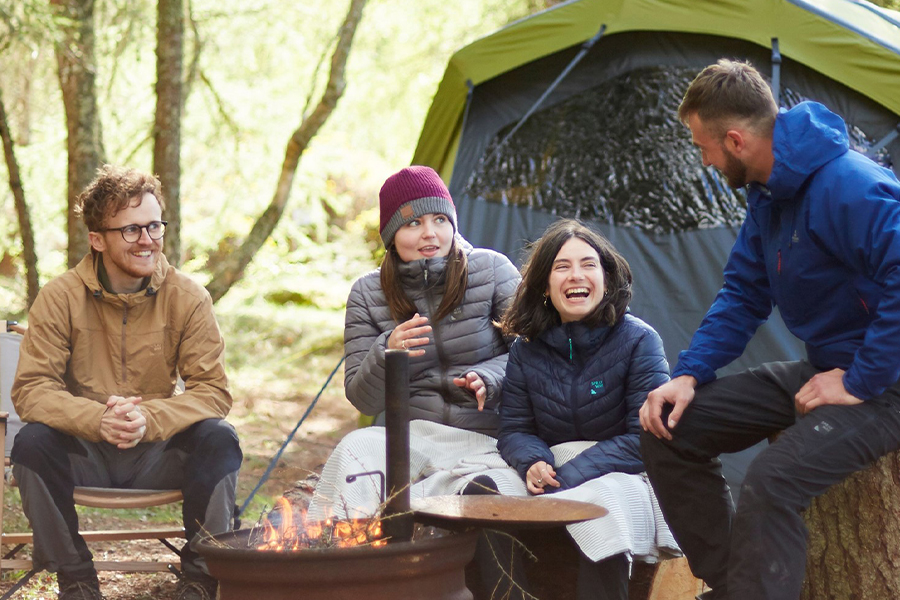
Know Your Camping Style
This guide covers five camping styles – caravan park, national park, 4WD/touring, remote, and human-powered adventure – plus a section on gearing for hot and cold conditions. Find your style, check the essentials list, and kit out accordingly. Most gear crosses over well between styles once you have a solid base kit. These lists aren’t exhaustive; they simply cover of on the essentials.
We’ve popped in some helpful links to our website categories to get you started, and we’re always happy to help you put together the perfect camp kit — so don’t hesitate to reach out to us here anytime!
1. Caravan Park Camping – The Classic Aussie Long Weekend
Best for: Families with young kids, first-timers, and those who want to relax in the outdoors without being completely on their own.
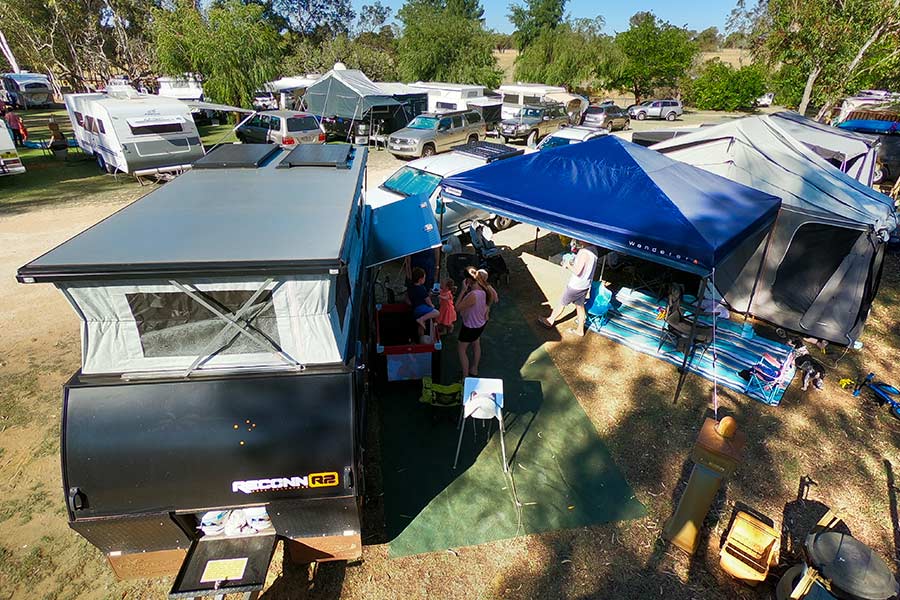
Caravan parks are the easiest entry point into long weekend camping – powered sites, hot showers, camp kitchens, and often a pool or playground on-site. What you take is limited only to what your vehicle can transport, and it’s likely you’ll be able to shop for food once you arrive. Bring the stretchers, the kids’ bikes, games. No reason to hold back.
Long Weekend Gear Essentials
- Large family tent or cabin tent – plenty of room for three nights
- Stretcher beds or camp mattress – comfort over three nights makes a real difference
- Sleeping bags rated for the season
- Camp table and chairs, including kids’ versions
- Full camp kitchen setup – optional if you plan on using the facilities at the park
- Esky or Icebox – caravan parks often have a fridge you can use
- Power board and extension cord for the powered hook-up – parks often require orange 15A leads, and choose a power board with overload protection
- LED lights, headlamps and/or torches
- Entertainment for three days – bikes, balls, fishing rods, outdoor games
LONG WEEKEND TIP: Long weekend caravan parks fill up weeks – sometimes months – in advance. Don’t leave the booking until the week before. Check cancellation policies too; plans change.

2. National Park Camping – Nature with a Safety Net
Best for: Families, couples, and nature lovers who want genuine immersion in the outdoors with some basic facilities still in place.
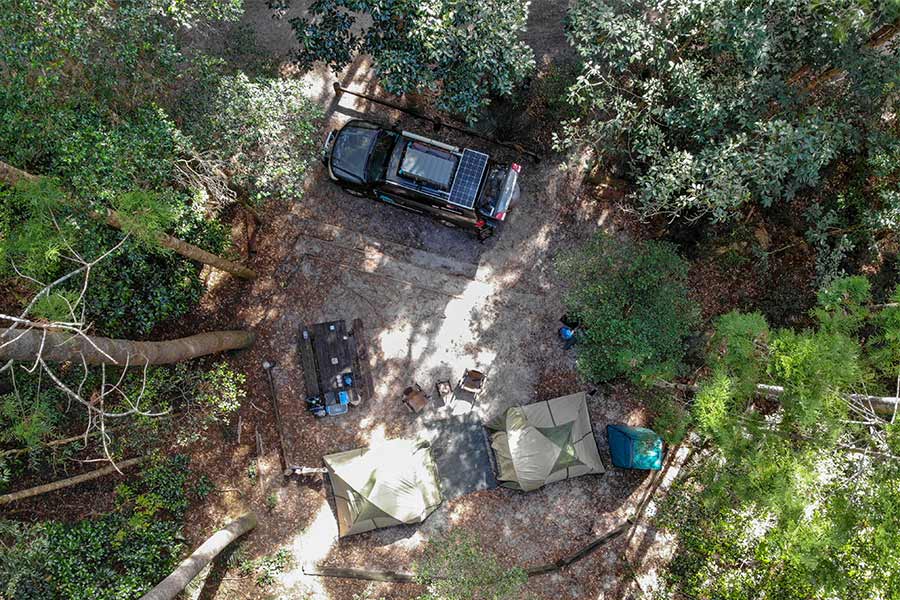
National park camping puts you in genuinely spectacular country with a basic safety net still in place – amenities block, fire rings, rangers nearby, and a designated site that’s yours for the weekend. You’re more self-sufficient than a caravan park (no mains power or water, longer drive from town) but nowhere near the demands of true remote camping. It’s the natural next step up, and a great confidence builder.
Long Weekend Gear Essentials
- A reliable weather-rated tent – national park conditions can be unpredictable
- Sleeping bag and mat rated for the overnight temperatures
- Portable gas stove – fires are frequently banned or restricted, don’t rely on them
- Water storage – carry enough for the full long weekend even if tap water is on-site
- Water treatment or filtration as a backup
- LED lantern and headlamps
- Camp table and chairs
- 12V Fridge or quality icebox
- 12V portable battery + solar panel for extended stays – no mains power on-site
- Download maps offline before you leave – phone signal in national parks is unreliable
- PLB recommended, especially in larger or more remote parks
- First aid kit and insect protection
LONG WEEKEND TIP: Long weekend bookings for popular national parks sell out fast – sometimes months in advance. Check the relevant park authority’s booking system early: SA National Parks, Parks Victoria, NSW National Parks, and Queensland National Parks all have online booking. Don’t assume you can rock up and find a site.

3. 4WD / Touring – The Vehicle is the Base Camp
Best for: Adventure drivers, serious gear enthusiasts, and those who want to use a long weekend to explore country that most people never reach.
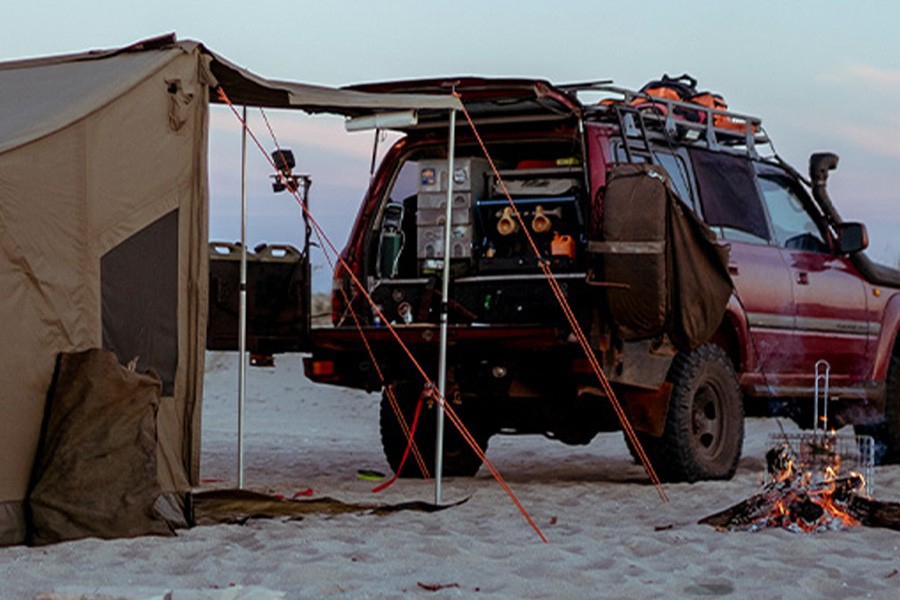
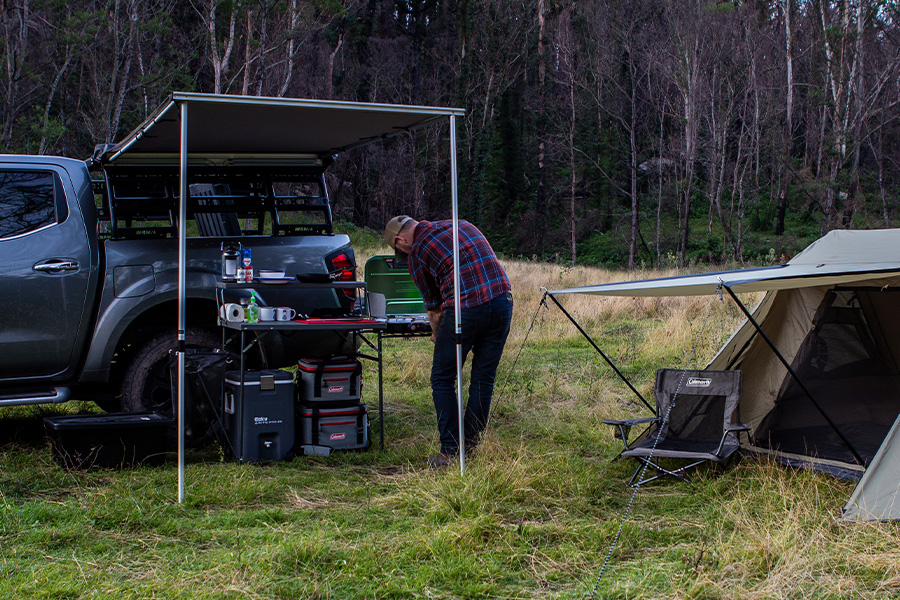
4WD camping turns the vehicle itself into the base camp – rooftop tent, 12V fridge, dual battery, onboard water – letting you reach places most setups simply can’t. A long weekend is just enough to get well off the beaten track and back without rushing. The gear investment is significant once vehicle mods start, but even a modest 4WD with a swag in the back is a formidable long weekend machine.
Long Weekend Gear Essentials
- Rooftop or touring tent, or quality swag
- Sleeping bag and mat rated for the overnight temperatures
- 12V fridge/freezer to keep food and drinks cold, no ice runs required
- Dual battery system or portable power with DC-DC charger and/or folding solar
- Water storage, onboard or portable
- Water treatment – filter water as you refill
- Gas or dual-fuel stove – a slide-out camp kitchen is the gold standard
- Camp table and chairs
- UHF radio for communication on remote tracks
- PLB or satellite communicator – non-negotiable if you’re heading well off-grid
- Vehicle recovery kit: snatch strap, shackles, MaxTrax, tyre deflator and inflator, hi-lift jack
- Full first aid kit, fire extinguisher, and a solid tool kit
LONG WEEKEND TIP: A long weekend is a great opportunity to test a new part of your setup before committing to a longer trip. Identify issues or pain points with your setup and sort it before you leave – not when you’re 80km down a track.

4. Remote Camping – Off the Grid, Alone with Nature
Best for: Experienced campers who want solitude, self-sufficiency, and a genuine long weekend reset in the outback.
Remote camping takes 4WD Camping to the next level. It means no facilities, no phone signal, no safety net – you carry everything in and carry everything out. Three days in genuinely remote country is one of the most rewarding long weekend formats in Australia, but it demands capable gear, solid planning, and likely extra travel time. This is not the time to test budget kit. One reliable piece of gear is worth more than three cheap ones that might let you down.
Long Weekend Gear Essentials
- A durable shelter capable of handling strong wind and rain – don’t cut corners here
- A sleeping bag and mat rated well below the expected overnight temperature
- Reliable 12V fridge/freezer to keep food and drinks cold
- Reliable stove with enough fuel for three days of cooking
- Water filtration or purification system – unless you can carry three days of water plus emergency supplies
- Satellite communicator (e.g. Zoleo or SPOT) for two-way messaging – or at minimum a PLB
- Topographic maps and compass – don’t rely on a phone for navigation in remote areas
- Leave No Trace: waste bags, trowel, biodegradable soap
- Comprehensive first aid kit
- LED lantern and headlamps
- 12V portable battery + solar panel for extended stays – no mains power on-site
- Leave a detailed trip plan with someone at home – location, route, and when to raise an alarm if needed
LONG WEEKEND TIP: A long weekend is just enough time to do remote camping properly – but not enough time to recover from poor planning. Do your route research, check weather forecasts, let someone know your plan, and carry a PLB. No exceptions.
5. Human-Powered Adventure Camping – No Vehicle Required
Best for: Hikers, cyclists, and paddlers who want to reach places a vehicle can’t – under their own steam.
Some of the best long weekend campsites in Australia can’t be driven to – they’re at the end of a long walk, around a river bend only a kayak can reach, or along a ridge only a loaded bike can access. Whatever the mode, the gear philosophy is identical: every gram has to earn its place. Buy the lightest version that’s genuinely up to the job, and the core kit can be used for any activity.
Long Weekend Gear Essentials
- Ultralight tent, tarp, or bivy – packable and weather-appropriate
- Down or synthetic sleeping bag – prioritise packability and weight
- Compact sleeping mat – packs smallest, critical for comfort over three nights
- Compact stove, lightweight cookset & dinnerware
- Water filtration – squeeze filter or straw filter for minimum weight
- Merino or synthetic base layers, waterproof shell, gloves & beanies
- Navigation: downloaded topo maps, compass, GPS or phone with offline maps
- PLB – non-negotiable for any multi-day trip away from help
- Leave No Trace hygeine: trowel, waste bags, biodegradable soap
- Headlamp with spare batteries
LONG WEEKEND TIP: A long weekend trip close to home is the ideal first human-powered adventure – long enough to find out what works, short enough to survive any surprises. Sort the kit at home, not on the trail.

Camping for the Conditions – Hot Weather vs Cold Weather Gear
Applies to all camping styles – because the Australian climate doesn’t care what your plans are.
A long weekend in Australia can mean 38°C in the Queensland outback or a sub-zero overnight in the Snowy Mountains – sometimes in the same month. Getting your gear right for the conditions isn’t just about comfort; in extremes, it’s about safety. Here’s what changes across the key gear categories.
Shelter
Hot: prioritise ventilation – large mesh inners, dual-wall construction, the ability to pitch the fly high. Lighter coloured flies reflect more heat.
Cold: choose a 3–4 season tent with a robust pole structure, low profile, and full-coverage fly that reaches near the ground to block wind and retain warmth.
Sleeping System
Hot: a liner or lightweight sheet bag is often enough – a full sleeping bag in summer is miserable.
Cold: buy a bag rated at least 5°C below the coldest overnight temperature you expect (look for EN or ISO standard temperature ratings) Your sleeping mat R-value matters as much as the bag – the ground pulls heat out of your body faster than cold air does. R4+ is essential below 5°C overnight.
Clothing and Layering
Hot: lightweight, breathable, quick-dry fabrics, a quality sun shirt, wide-brimmed hat, and UV sunglasses.
Cold: the layering system – merino base, insulating mid-layer (down or synthetic), waterproof/windproof shell. Cotton is dangerous in cold conditions; it holds moisture and loses all insulation value when wet.
Hydration
Hot: water needs can jump to 4–6+ litres per person per day with physical activity – dehydration is the most common preventable illness on Australian camping trips. Carry more than you think you need and use electrolytes in the heat.
Cold: thirst signals are suppressed in the cold even as your body needs fluids to generate warmth – drink consciously, and use hot drinks (tea, broth, coffee) to stay warm and hydrated.
Stove and Fuel
Hot: most stoves perform fine, but always check fire restrictions before you leave – total fire bans in summer can cover gas stoves and alcohol burners.
Cold: isobutane canisters lose pressure below ~5°C, causing slower boil times and unreliable performance. Fix with a regulated gas stove, warm up your canister, or switch to a liquid fuel stove for serious alpine trips.
Safety by Season
Heat: key risks are dehydration, heat exhaustion, and bushfire – hike early, rest in shade, check the fire danger rating, and have a clear plan if conditions change.
Cold: key risks are hypothermia and exposure – wet plus cold is dangerous, change out of wet layers immediately, carry a PLB, and always leave a trip plan with someone at home.
LONG WEEKEND TIP: Checking the Bureau of Meteorology forecast before any long weekend camping trip is non-negotiable – not just the daytime high, but overnight lows, wind speed, and any watches or warnings in the area. Weather apps are handy, but bom.gov.au has the most detailed and reliable forecasts for Australian conditions.
Don’t Let the Long Weekend Pass You By
The biggest barrier to a great long weekend is almost always just getting organised. The right gear, sorted in advance, means you leave work on Friday, throw the kit in the car, and go. Find your style in this guide, fill your list, and get out there.
Browse our full range of camping gear at snowys.com.au or visit us in-store in Adelaide or Brisbane.
Long weekends are for camping. 🌲


Trekker, surfer, climber, mountain biker, runner, camper. Participator in most things… master of none.