Choosing a sleeping mat for your overnight hiking adventures can be a confusing affair! There’s a lot to consider: comfort, weight, size (both packed and inflated). Comparing all those details against price and your budget can positively make your head spin!
Some lightweight mats carry a significantly steep price tag on account of all the new technologies and fabrics incorporated into their design. It’s not easy to decide, and what works for one person won’t necessarily work for another.
Below, we’ve hand selected the best mats from our range to suit each type of adventure, climate, and budget. Before we get into the countdown, let’s cover some of the common questions asked about lightweight hiking mats.
If you’re looking for a mat for general camping, check out our Best Camping Mattresses in 2026 article here >>
Choosing a Hiking Mattress
Think of it as part of your complete sleep system
Your sleeping mat is just one part of the equation. Consider your sleeping bag, what you’ll be wearing to bed, and any extras that might round out your sleep system for the conditions you’re camping in.
Ben & Lauren discuss this in depth with Sea To Summit on the Snowys Camping Show, listen in here >>
What size should you get?
If you’re in the ultra-lightweight category, you’ll probably want to consider the shorter version of any mat. This reduces weight, but you may need to use something else to insulate your feet if the ground is cold. If weight is not a big concern and you just want comfort (or you’re a cold sleeper), choose a mat that is roughly the same length as you are in height.
Width should also be considered, especially for users with larger frames. Women’s sleeping mats are usually shorter than the men’s equivalent, and often have increased insulation around the feet and hips.

Unless weight is an issue, go for the size that matches your height. Image: Sea to Summit
Think about the R-value?
R-value is an indication of how well the mat resists the transfer of heat from one side to another. This applies to the heat or cold from under the mat, as well as the heat your body may lose into the mat.
The higher the value, the less likely it is you will feel cold (or heat) from the ground and the more body heat you will retain. There is now a new industry standard for R-value called ASTM F3340-18. Whilst the concept of R-value remains the same, the actual testing methods for the value have been updated.
This has been introduced in a bid to create a level playing field for R-value across brands and to help consumers make more informed choices when comparing the performance of sleeping pads.
We go into more detail on R-value and sleeping mat ratings in this article >>

In cold conditions, a higher R-value will help prevent you from feeling the cold. Image: Thermarest
There are a few mat types to choose between
- Closed-Cell Foam
These are made of dense foam with thousands of airtight bubbles inside. They do not compress down, don’t offer much comfort, but they insulate really well and are indestructible, lightweight and very affordable. When placed beneath your existing mat they increase R-value creating versatility in your sleep system.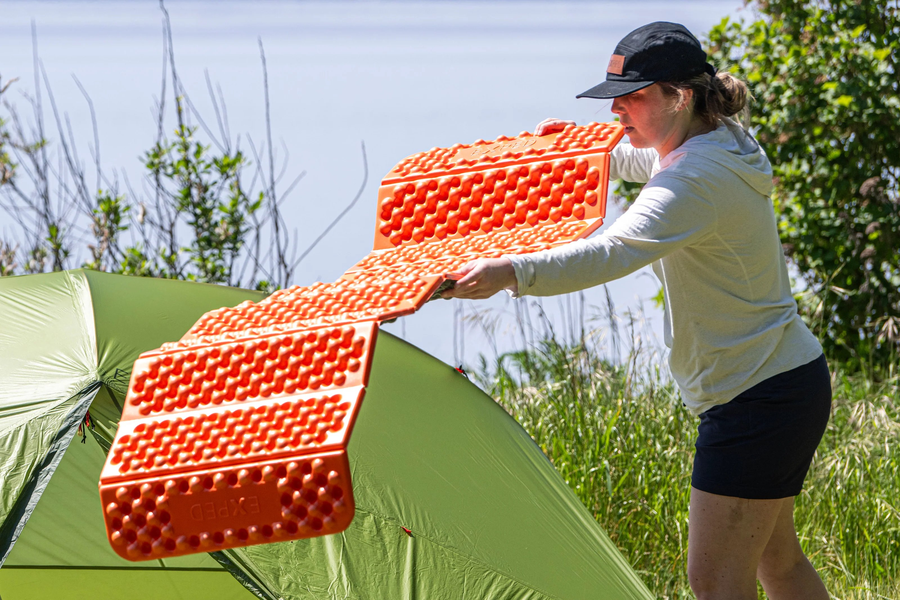
- Air-Filled
These consist of chambers or cells that require inflation before use. Air-filled mats offer superior comfort for their relative weight and packed size. They do require a pump or breath for inflation and should they get a puncture will go completely flat but can be field repaired. Insulated versions have chambers of synthetic fill or down to help trap warm air.
- Self-Inflating
These mats are slabs of open-cell foam, often with holes or cores cut out. Durable fabric is bonded to the foam at the surface and sealed on the edges to create an airtight mat. The expanding foam is what creates the self-inflating feature, but this also means they require a little more muscle to compress the foam when packing your mat away. The other benefit of these mats is that if a puncture does occur, they still offer some padding and insulation.
Now let’s jump into our picks for the best sleeping mats to suit any adventure. Note here that we choose the products we range based on value for money, feedback from our customers, as well as the quality and support from the manufacturer.
Best Sleeping Mat For Hiking
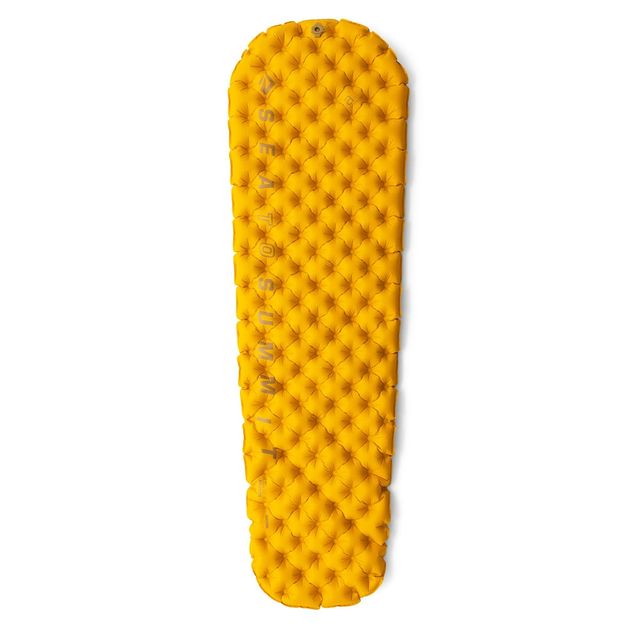
This mat incorporates the latest materials and design from Sea to Summit, who have managed to deliver more for less – claiming it’s 14% lighter, 30% thicker, and 16% more insulated than their previous lightweight model.
At 6.5cm thick with a wider profile, it offers superior comfort for a lightweight mat – particularly for side sleepers, who’ll appreciate the extra width and Air Sprung Cell construction that contours to your body and reduces pressure points. Firmness is fully adjustable so you can dial it in to suit your sleep style.
Sea to Summit’s ThermalCore insulation reflects body heat back into the mat rather than relying on fill volume, achieving an R-value of 3.6 while actually reducing packed size versus the previous model. For a three-season hiking mat, that’s a genuinely useful warmth-to-weight outcome. Inflation is handled via the integrated Airstream pump sack – no separate pump required – and the XPRESS valve makes deflation fast.
We recommend this mat because it strikes the best balance of comfort, warmth, and packability for just about any 3-season adventure.
Available in Small, Regular, and Large sizes.
Best for: Hikers wanting one mat to suit just about any adventure
Best Budget Hiking Mat
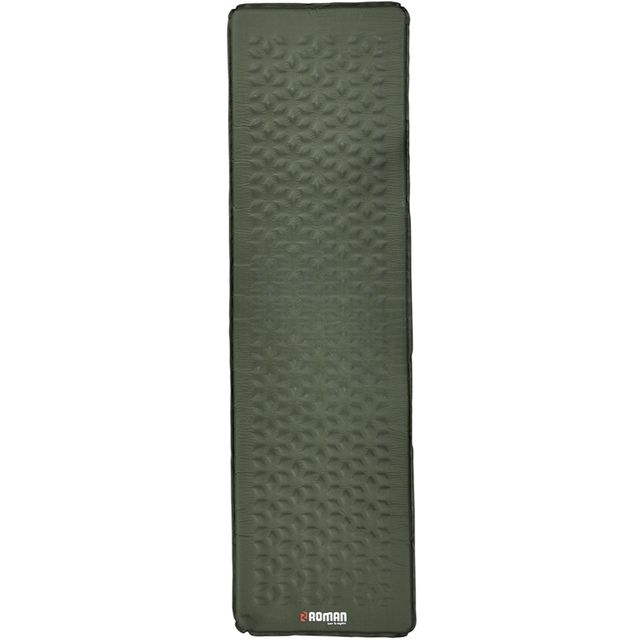
At well under $100, the Roman Palm 2.2 is hard to fault for hikers who want a capable self-inflating mat without the premium price tag. The self-inflating foam construction means setup is as simple as opening the valve – no pumping required – and at 640g with a packed size of 30 x 16cm, it carries and stows without complaint.
The 2.5cm foam interior provides solid cushioning for the weight, and the 190T polyester sleep surface is comfortable enough for multi-night use. An R-value of 2.2 makes it best suited to warmer weather and three-season conditions in milder climates. It’s not the warmest or thinnest mat on the market, but at this price point it delivers where it counts.
A repair kit and carry bag are included, so it’s ready to go straight out of the box.
We recommend this mat because it offers genuine trail-ready performance at an entry-level price – a smart starting point for hikers building out their kit.
Best for: Entry level hikers on a budget, school camps, or occasional use
Best Foam Hiking Mat
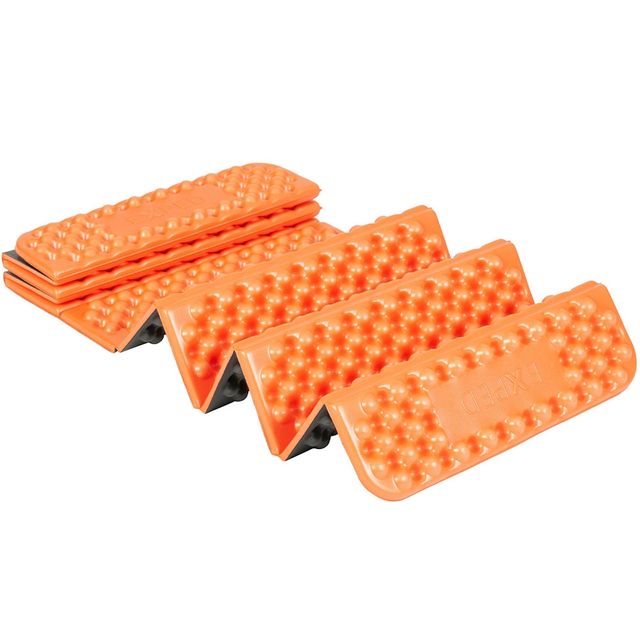
Most closed-cell foam mats are thin, cold, and borderline uncomfortable – the Flex 3R is Exped’s answer to that. At 3.1cm thick, it’s the thickest closed-cell foam mat on the market, and the IXPE foam construction delivers an ASTM R-value of 2.8, making it a genuinely capable standalone mat for cold-weather conditions rather than just an emergency layer.
IXPE foam is denser and more resilient than standard EVA foam used in self-inflating and regular camp mats, which shows in both the insulation performance and the durability. It’s also Oeko-Tex 100 tested, DWR-free, and made without intentionally added PFAS – meaningful if you care about what you’re sleeping on. The foldable design sets up instantly and there’s nothing to inflate, deflate, or puncture.
It works well as a standalone mat for cold nights, or layered beneath an inflatable for maximum ground insulation on serious winter trips.
We recommend this mat because it solves the main gripes with foam mats – lack of thickness – without adding complexity or puncture risk.
Available in X-Small, Medium, and Long & Wide
Best for: Ultralight gram seekers or for use as an extra insulation layer beneath another mat
Best Self Inflating Hiking Mat
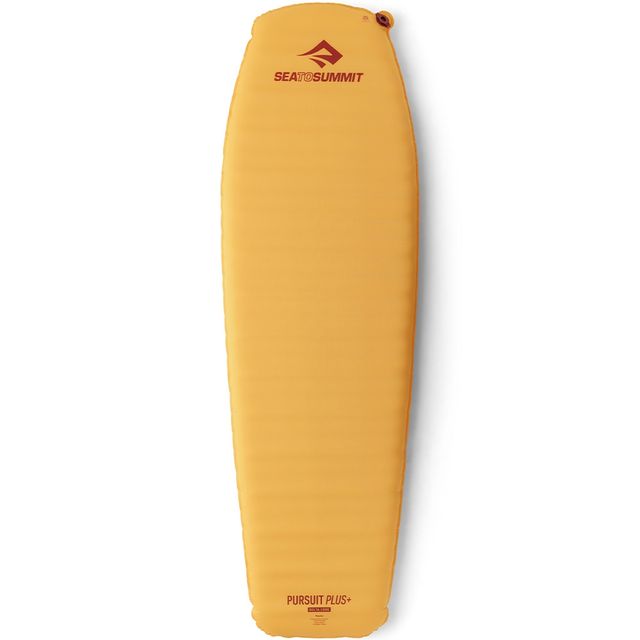
At 7.5cm thick, the Pursuit Plus sits in a different league to most self-inflating hiking mats – it’s closer to a camp mat in terms of comfort, but engineered to be carried on your back. Sea to Summit achieves this through Horizontal Delta Coring, which removes 40% of the foam and replaces it with air-filled channels that actually improve comfort while reducing weight and packed volume. The result is a mat that feels genuinely cushioned without the bulk you’d expect.
The ASTM-tested R-value of 4.2 makes it a capable three-season option, handling most Australian conditions with ease. Firmness is fully adjustable via the XPEL Multi-Function Valve, which also makes deflation fast when you’re breaking camp. The contour shape trims weight where it’s least needed, while a rectangular version is available if you prefer more room to move at night. Fabric is bluesign-approved, RCS-recycled, and PFAS-free.
We recommend this mat because it delivers a level of comfort that self-inflating mats rarely achieve, without crossing into the weight penalty territory of thicker camp mats.
Available in multiple sizes including tapered and rectangular shapes
Best for: Anyone needing the redundancy of having some foam for insulation in the event of a puncture
Best Hiking Mat For Side Sleepers
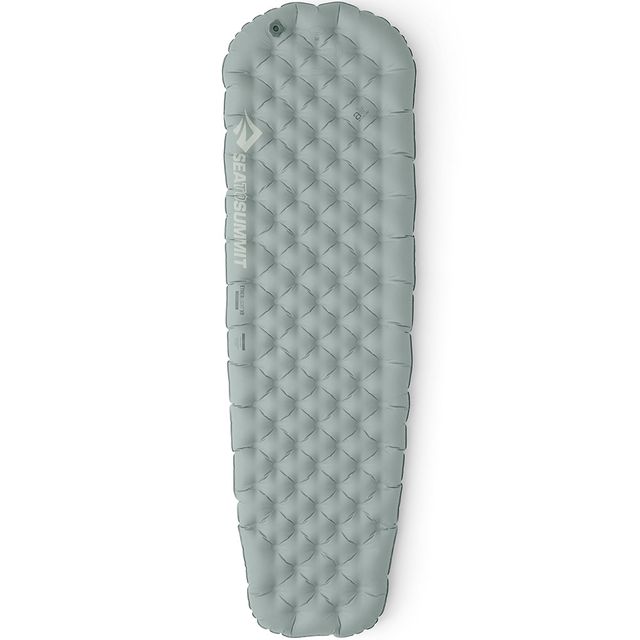
At 10cm thick and just 445g, the Ether Light XR sits in rare territory – genuinely plush cushioning at a weight that barely registers in your pack. The Air Sprung Cell construction is the key to why it works so well for side sleepers: individual cells act independently, contouring to your body and redistributing pressure rather than creating hard points where your hips and shoulders make contact with the ground.
Warmth is handled by ThermalCore insulation with a suspended reflective TRM layer that bounces body heat back to the sleeper, achieving an ASTM R-value of 4.1 without adding bulk – making it capable across three seasons. The stuff sack doubles as an integrated pump, so no separate gear is required, and the XPRESS valve handles fine-tuning and quick deflation. Packed down it measures just 20.5 x 11cm (Regular size) – impressively small for a mat this thick.
We recommend this mat because it solves the core problem for side sleepers – pressure relief – without the weight penalty you’d normally expect for this level of comfort.
Available in multiple sizes including tapered and rectangular shapes
Best for: Side sleepers or anyone wanting mattress height to allow hips and shoulders to sink into the mat
Best Insulated Hiking Mat For Cold Weather
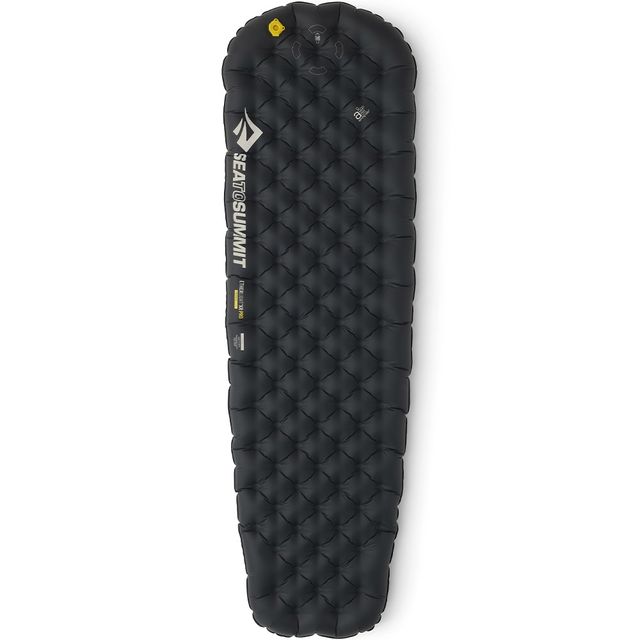
Best Mat for Cold-Weather Hiking: Sea to Summit Ether Light XR Pro Insulated
An R-value of 7.4 in a 525g hiking mat is a remarkable number – and that’s the headline stat that earns the Ether Light XR Pro its spot here. Where most hiking mats top out around 4-5, the Pro steps up with multiple layers of ThermalCore TRM reflective insulation achieving four-season warmth without a blow-out in weight or packed size.
The 10cm Air Sprung Cell construction delivers plush, pressure-relieving comfort, while the updated design is 25% lighter and half the packed volume of previous models. Inflation is via the integrated Airstream pump sack and XPRESS valve – no separate gear required.
We recommend this mat because it delivers four-season insulation in a format that’s actually viable to carry on a multi-day hike.
Available in multiple sizes including tapered and rectangular shapes
Best for: Alpine or snowy conditions where insulation from the ground up is important
Best Ultralight Hiking Mat
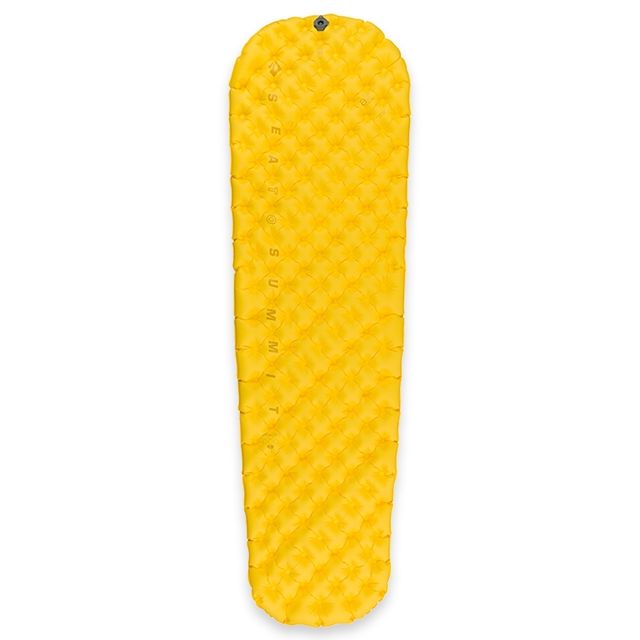
At 395g and packing down to just 17 x 7.5cm, the Sea to Summit Ultralight is one of the lightest and most compact sleeping mats on the market – and one of the more affordable options at this weight. The dot-weld construction creates individual air-filled cells that function similarly to a pocket spring mattress, providing decent cushioning at 5cm thick without any foam fill adding to the weight.
Inflation is via breath or the integrated Airstream pump sack, and the multi-function valve handles both inflation and deflation. The 40D ripstop nylon fabric has an antimicrobial treatment, so blowing it up by mouth is fine for the long term.
One important caveat: with an R-value of just 1.1, this is strictly a warm-weather and spring/summer mat. If you’re hiking into cooler conditions, step up to the Ultralight XR or Ether Light models above.
We recommend this mat for fair-weather ultralight hikers and gram-counters who want to shave every possible bit of weight and volume from their sleep kit.
Available in Small, Regular and Large sizes.
Best for: Gram savers wanting a step up in comfort from a thin closed cell foam mat
An older episode, but still an interesting chat with Ross from Sea to Summit about their sleeping mats on the Snowys Camping Show >>
Hiking Sleep Mats FAQ’s
R-value measures thermal resistance — the higher the number, the better the mat insulates you from the ground. For hiking mats, there’s a trade-off: higher R-value generally means more weight. Think about the conditions you’ll be hiking in and find the right balance for your needs. We have more detail here >>.
Air-filled mats, such as the Thermarest NeoAir and the Sea to Summit air-filled mats, create more noise than self-inflating mats. The good news is that this noise is usually due to the fabric being new, so it will decrease over time and is a small trade-off for much more comfort.
Same as you would a regular camping mat, although a hiking mat can be easier as you are dealing with less fabric. You need to compress the foam to squeeze the air out as you roll a self inflating mat, air filled mats roll with very little effort.
You need to be innovative when hiking as you will have minimal gear with you. Use your clothing, pack or water bladders to alleviate hard spots or create a pillow, and you can warm the mat up by laying a thermal blanket underneath. A closed cell foam mat, although bulky, is a super lightweight addition to your kit that can be strapped to the outside of your pack and used under your existing hiking mat for extra padding and insulation.
There’s no right or wrong answer here. Air filled generally offer the most thickness at the smallest pack size, self-inflating offer some padding and insulation redundancy in the event of a puncture, and closed cell foam mats are super light when in/on your pack but at the expense of some comfort when sleeping.
Not necessarily, if you sleep comfortably on the hard ground, or are travelling somewhere where you can create a soft sleeping pad with the natural materials in the area then you can probably get by without one. However, most people do take one to ensure a good night of rest after being on the trail all day.
Wherever possible, always use something between your body and the mat such as a sleeping bag or liner. This reduces the amount of oil and sweat that soaks into the mat. Should your mat need cleaning, use a mild soap with warm water and a soft-bristled brush to gently clean the surface.
Self-inflating mats are best stored inflated. This ensures the foams’ memory is in an expanded state which shortens the time it takes at camp for the mat to inflate. Given they are much smaller it is easier to store a hiking mat inflated than a large camping mat. Air-filled mats are much easier to care for, they are best stored loosely rolled, but if space is a premium, they can be rolled up and stored in their stuff sack once they’re clean and dry.


Trekker, surfer, climber, mountain biker, runner, camper. Participator in most things… master of none.
The EXPED Downmat is the best mat I have ever had in over 50yrs of lightweight bushwalking and cross country skiing. Light, compact, super warm and comfortable.
gday,
theres no mention of the nemo tensor mats here. is that because they dont rate in your view or you dont sell them?
G’day Wendy, no mention for the 2021 update, but we totally rate them! The ranking in this article is based on sales from the past year for the lightweight mats that we currently stock. Our range is always evolving though, so it’s always fun to see which mats make the top 10 and we love exploring ‘new to us’ brands.
I love the new either light! Best night sleep EVER!
Hi Ben,
I was a bit surprised that the exped synmats didn’t make it into the top 10. When I visited snowy’s prior to Christmas to buy a camping mat for my wife, the lady said that exped was leaving thermarest in its wake! Hence my wife scored an exped and we’ve just done the Kangaroo Island wilderness trail and the exped was given the thumbs up. (Fortunately for me!)
The Synmat made it onto our best sellers list last year actually, and it’s still a fantastic hiking mat that we would recommend for those looking for a very comfortable yet insulated mat. Phew, sounds like you made a great choice Neil!
Hi there, very informative article and a great reference for those looking for a new sleeping mat. The section on the S2S Camp Mat SI is a little misleading as the standard is 51cm wide and weighs 0.78kg. The reference to over 1kg and 63cm wide only applies to the “wide rectangle” variant referenced at the end of the section. Suggest the start is updated to reference the standard.
I updated this, thanks Huntzman and apologies for the confusion.
Great article and comprehensive. I think it’s worth being more explicit, though, that non-insulated air-filled mats are not suitable for cold conditions, in case someone thinks they can wing it with their air mat and finds out otherwise!
Thanks for your feedback, Connor. It’s difficult to add all the detail we would like in just a few paragraphs. We have links to our product pages on the article where the R-Value is listed for each mat.
You are right though, it is important that people understand an air-filled mat will not provide the insulation required for cold environment adventures.
The EXPED Downmat is the best mat I have ever had in over 50yrs of lightweight bushwalking and cross country skiing. Light, compact, super warm and comfortable.
Great article! I believe there’s an error on the “Sea to Summit Comfort Plus Insulated Sleeping Mats” review as the R-value is put as “6.3”. The R-value on the mat I believe is actually “5” (as stated on your website and the packaging of the product). Love these recent articles Snowys is doing, thanks.
Well spotted Oliver – thanks for letting us know and for the positive feedback. I’ve updated it now, so hopefully, it doesn’t cause any more confusion! Cheers.
That escalated quickly……
Outdoor Gear Lab rated the Therm-a-Rest NeoAir XTherm:-
“For over two years, the NeoAir XTherm continues to take home our Editors’ Choice Award. After testing the best the sleeping pad market has to offer, we have yet to find a better combo of warmth and heat retention, longevity, comfort, low weight, and small packed volume. Forced to choose just one model for the entire year, this would be our hands-down choice. No pad reviewed was warmer, yet it weighs less than a pound. “!
Thanks, Robin, I’m sure this will be useful information for anyone considering the XTherm amongst the mats we listed here. The main limitation of the NeoAir XTherm though is the affordability of the mat at 3 to 4 times the price of anything comparable in our range. No discredit to the mat though, Thermarest produce outstanding products and the XTherm would be no exception, it’s just not something that we carry in our range. I think that even if we did, we wouldn’t see enough of them going our doors to make it into our top 10 sellers.
Not having the Therm-a-Rest NeoAir XTherm in your Top 10 really discredits your list! The Therm-a-Rest NeoAir XTherm is BOTH lighter and warmer than your No1 mat “Sea to Summit Ultralight Insulated Sleeping Mat”!
We can’t argue with you there Robin, the Thermarest NeoAir XTherm certainly has an outstanding warmth to weight ratio and we’ve no doubt that it would be a fantastic mat. We don’t actually sell the XTherm though. This is not to discredit the quality or performance of the mat. Based on our history with the NeoAir range it is not a mat that is in high demand by our customers, most likely due to its budget-busting price being more than 3 times than that of the Sea To Summit Ultralight Insulated mat that topped our list. Thanks for your feedback though, the NeoAir XTherm certainly has a place in the rucksacks of people who do not want to trade off warmth and weight for a lesser price.
No problems Bin – if you can’t even spell my name correctly then I’m talking to a Moron!
Sorry Robin, my bad. All fixed now.
They don’t sell that mat though! This is a list of top ten mats THEY selI… Dddduuurrrhhhh. ?♀️
Great to have a brief summary of each put together. I will say that the Sea to Summit Insulated Comfort Plus and Insulated Light mays that we’ve been using for three years is still very noisy (so not just noisy “when new”), especially when sharing a hiking hut with other trekkers!
Thanks for the feedback on this Fayley, we are getting mixed reviews on the noise of these mats. I think it would be safe to assume that the air filled mats are always going to be noisier than their self-inflating counterparts. I guess it’s just something a user needs to trade off against all the other details (weight, packed size, comfort etc). Hopefully, the noise of your mat is offset by the comfort it delivers. ~ Ben